
- The Method
- Who We Help
- How We Work
- Results
- Insights
- About
- Assessment See the Method
A practical framework for making work visible, measurable, and improvable, then keeping it that way through a routine your leaders actually run.
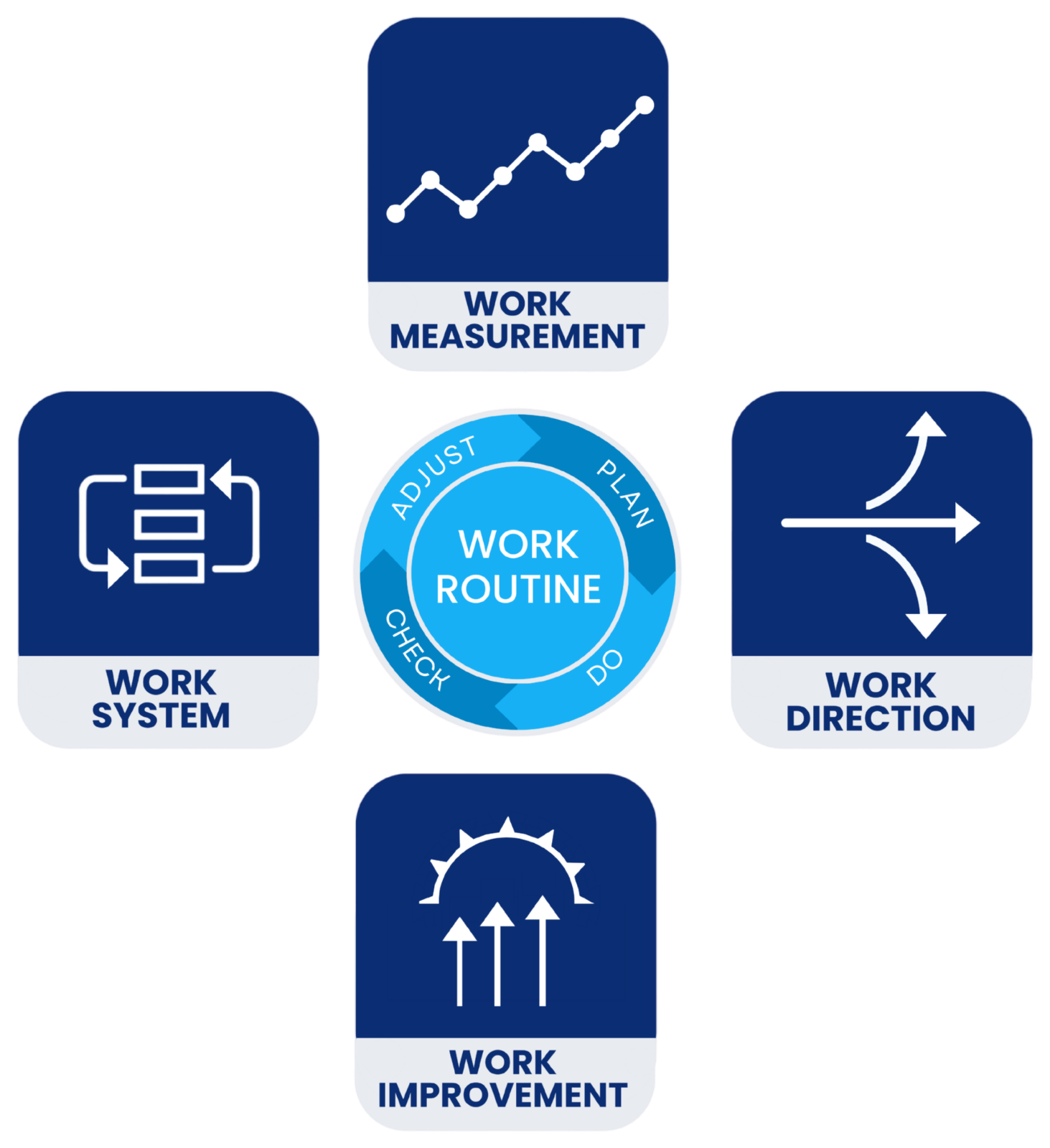
The Work Excellence Method is a four-element operating framework held together by the Work Routine: Work Direction, Work System, Work Measurement, Work Improvement, and Work Routine, which organizations use to make work visible, agree on what matters, measure it consistently, improve it deliberately, and sustain that discipline through a recurring leadership rhythm. It is applied to real work through workshops and coaching, and captures shared, visual Page Sets.
Growth adds volume, people, sites, and complexity faster than it adds structure. The informal coordination that worked at 80 employees quietly fails at 400. Each element below closes a specific part of that gap.
What really matters now?
Shared clarity on purpose, priorities, ownership, and the desired future state, including what can wait. Most leadership teams believe they are aligned until they write their priorities down separately.
How does work actually flow?
Structure, order, and flow. Processes, roles, handoffs, and cadences made visible and repeatable. Not a binder of procedures nobody opens, a shared picture of how work moves, including the parts that currently live in one person's head.
How do we know what's working?
A focused set of measures that support decisions instead of producing reports. One client refined 76 disconnected measures into 14 critical ones, and for the first time their operational metrics connected to executive outcomes.
How does the system get better?
Recurring problems, gaps, and opportunities turned into structured actions and learning cycles. The distinction that matters: improving the system rather than repeatedly treating the same symptom.
How do we stay on the same page?
The recurring operating rhythm where direction, system, measures, and improvement get reviewed and acted on. It is the element most organizations skip, and the reason most improvement programs fade.
A workable weekly review takes about thirty minutes and covers priorities, performance, problems, and next actions, run off the same visual page every time.
Consistency matters more than sophistication. A modest routine held every week beats an elaborate one held when things are calm.

Two artifacts make the Method durable, one holds the current picture, the other holds everything you've learned.
A connected set of visual pages for a team or department: priorities, the work system, the measures that govern it, and the active improvements. Humans process visual information far faster than text, which is why a shared picture ends debates that months of email could not.
Enhances the document management tool you already have, turning it into a powerhouse of knowledge: decisions and why they were made, recurring issues and their resolutions, playbooks, and lessons. It shortens onboarding, reduces succession risk, and is the foundation any serious automation or AI effort requires.
We begin with an actual challenge your team already carries, not a training exercise.
In working sessions with the people who own the work, we make direction, flow, and measures visible.
The Page Set becomes the agenda for a short recurring review, coached until the team runs it without us.
Once value is visible, the same method extends to more leaders, departments, or the enterprise.

Each element plays a distinct role. Work Direction defines the value, Work System creates it, Work Measurement ensures it, and Work Improvement moves it forward.
They are held together by the Work Routine: the rhythms and cycles that keep alignment active and sustainable over time.
More videos on YouTube →What a work system is, why dashboards fall short, and how the routine fits a week that is already full.
A work system is the visible, agreed description of how a specific body of work actually flows: the steps, the roles, the handoffs between people and departments, the dependencies, and the cadence at which it runs. It differs from a process map in that it includes ownership and rhythm, not just sequence.
A dashboard shows outcomes. It does not show the work that produced them, who owns each step, where work is currently stuck, or what should change. Visibility into work means seeing direction, flow, measures, and improvement together, which is why the Method connects all four rather than adding another chart.
No. Work Excellence does not replace your ERP, CRM, or project tools. Those systems store records and activity. The Method creates the operating discipline that makes what is already in them actionable, deciding what to do about the work and how to improve the system that produces it.
A team-level Work Routine can take as little as 30 minutes per week to review priorities, performance, problems, and next actions. Monthly and quarterly routines provide time for deeper review and adjustment. The goal is to make the time your team already spends coordinating work more focused and effective.

Bring the piece of work that keeps generating the same conversation. We’ll show you what it looks like once it becomes visible.